Selling a car in San Francisco: when California wants a smog certificate
Yes, in most cases: California makes the seller give the buyer a passing smog certificate, and it stays valid for 90 days. The exceptions are specific. Gasoline and hybrid cars four model years old or newer, gasoline cars from 1975 or earlier, electric cars, older or heavy diesels, and transfers to close family or to a dismantler for junking need none. Below are the DMV and BAR rules, a checker for your car, where to test in San Francisco, and what to do if the car fails.
Sources re-checked .
Short answer
Usually yes. California makes the seller give the buyer a valid smog certificate, good for 90 days. Gasoline and hybrid cars four model years old or newer, 1975 and older gasoline cars, electric cars, older or heavy diesels, and transfers to close family or to a dismantler for junking are exempt. Find a licensed San Francisco station with BAR's Auto Shop Locator.
What a California seller owes the buyer
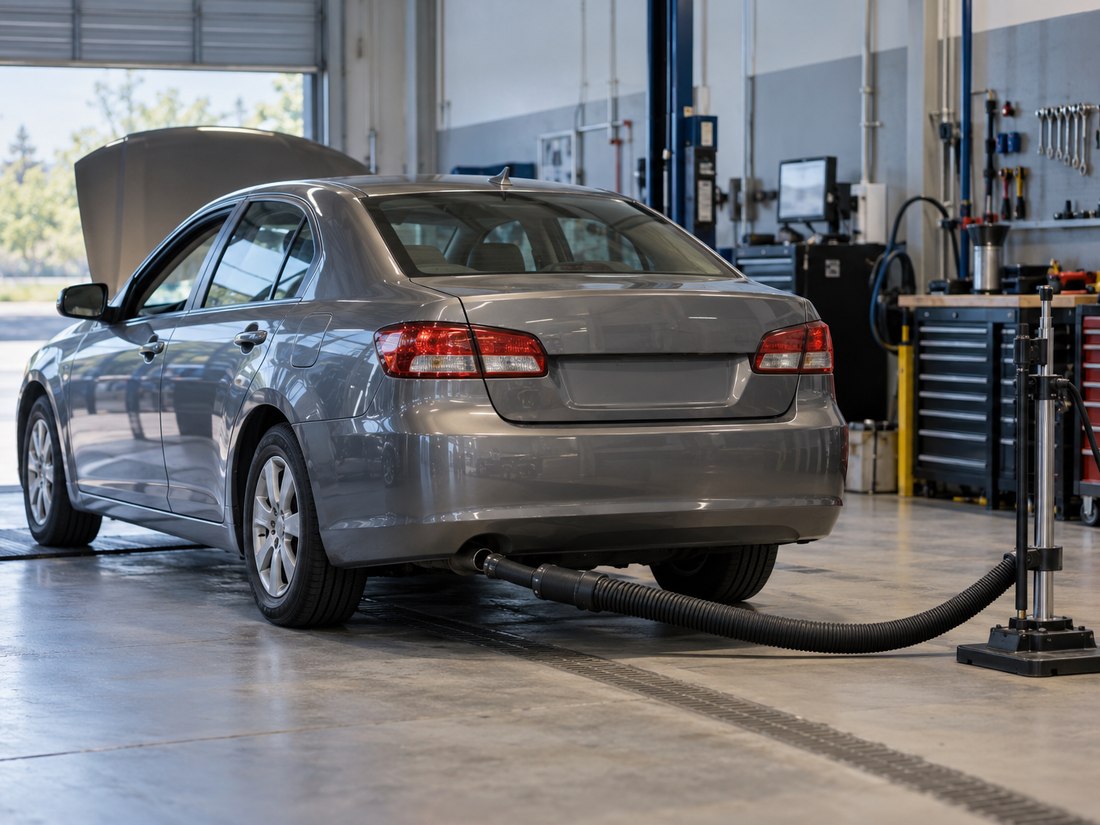
The DMV states the rule as a yes to the seller's question: "If you are selling your car, you need to give the new owner a valid smog certification when you sell the car." The duty is yours as the seller, not the buyer's. BAR, the Bureau of Automotive Repair, runs the Smog Check program. Its smog page says the check comes before you sell, and that you give the buyer a copy of the vehicle inspection report.
The certificate has a shelf life. In BAR's words: "The certificate is electronically sent to DMV and is valid for 90 days." A test in March will not cover a sale in July. So book the test once the car is ready to list, and keep the report with the title.
One shortcut exists. If the car passed a smog check for its registration renewal, and the transfer reaches the DMV within that certificate's 90 days, no new certificate is needed. BAR's Reference Guide lists the same exception. You must then give the buyer the DMV's Vehicle Emission System Statement, form REG 139, which both of you sign. The form also lets the buyer have the car tested before the deal closes. If that test fails, the form says the seller repays its cost and pays for the repairs that bring the car into compliance.
Source: DMV: smog inspections; BAR: Smog Check, when you need one; DMV form REG 139 (PDF); BAR: Smog Check Reference Guide (PDF).
Cars that are exempt when they change owners
BAR's smog page lists the vehicles that need no certificate at a change of ownership, and its Smog Check Reference Guide adds the natural gas line:
- Newer gasoline cars: gasoline, hybrid and alternative-fuel vehicles four model years old or newer. The new owner pays the DMV a smog transfer fee instead, listed at $8 on the DMV fee page as of October 29, 2026.
- Old gasoline cars: gasoline, hybrid and alternative-fuel vehicles of model year 1975 or earlier.
- Older or heavy diesels: model year 1997 or earlier, or a gross vehicle weight rating over 14,000 pounds.
- Heavy natural gas vehicles: the Reference Guide exempts CNG, LNG and LPG vehicles rated at 14,001 pounds or more, for now.
- Electric vehicles and motorcycles.
The newer-car window runs on BAR's own sum: add four to the model year. Its brochure says a 2020 model needs a change-of-ownership check if sold in or after 2024. For a sale in 2026, that makes a 2023 or newer gasoline or hybrid car exempt, while a 2022 car needs a test. Diesels get no newer-car window: "There are no model year exceptions for diesel vehicles." A 2025 diesel pickup rated 14,000 pounds or less needs a certificate like any other car.
Source: BAR: Smog Check, when you need one; BAR: Smog Check brochure (PDF); BAR: Smog Check Reference Guide (PDF); DMV: registration fees.
Family members, dismantlers and dealers
Family. The DMV's smog page says a car you are given by a spouse, domestic partner, sibling, child, parent, grandparent or grandchild needs no smog inspection. The exception is a car that relative bought for you without first titling it in their own name. BAR describes the same exemption as a transfer between immediate family members. The DMV's Statement of Facts, form REG 256, is where the exemption is claimed. A footnote on that form says a certificate is still needed when a biennial smog check is required. Cousins, aunts and uncles are not on the list.
Dismantlers. The DMV's procedures manual exempts a car transferred to be wrecked or dismantled, which the DMV calls junk, from the smog inspection requirement. The junk car guide walks through that route.
Dealers. BAR's Reference Guide lists the transfers that skip the certificate, and a sale to a dealer is not on it. Treat the DMV's general rule as the starting point, and ask BAR through the DCA Consumer Information Center at (800) 952-5210 before you count on an exemption.
Source: DMV: smog inspections; BAR: Smog Check, when you need one; DMV form REG 256 (PDF); DMV procedures manual 19.030: junking a vehicle; BAR: Smog Check Reference Guide (PDF).
Where to test in San Francisco, and what the station checks
San Francisco is on the DMV's list of counties where a smog inspection is also due at registration renewal. Use BAR's Auto Shop Locator, pick the Smog Check Inspection service and enter your ZIP code. A test-only station inspects but does not repair. A test-and-repair station does both.
BAR says your DMV registration renewal notice tells you whether the car must test at a STAR station. If it does not, any test-and-repair or test-only station can do the check. The Reference Guide adds one more case: a car found to be a gross polluter can be certified only at a STAR station or by a Referee. BAR does not regulate inspection prices, so call two or three stations. Every station must charge the $8.25 certificate fee, according to BAR as of October 29, 2026.
The kind of test depends on the car's age. BAR says most 2000 and newer cars get an on-board diagnostic check and pre-2000 cars get a tailpipe test. Its Reference Guide adds that the state is split into Enhanced, Basic and Change of Ownership areas, which set the test for 1976 to 1999 cars, and that a sale needs a certificate in all three. Before you go, get a lit check engine light fixed, because BAR says the car will not pass with it on. After a battery swap, BAR suggests a week or two of driving so the readiness monitors reset. BAR's inspection history lookup shows the car's past results.
Source: DMV: smog inspections; BAR: Smog Check, when you need one; BAR: Auto Shop Locator; BAR: Smog Check Reference Guide (PDF).
If the car fails: repair help, retirement, or a sale as it stands
Start with the vehicle inspection report, which lists why the car failed. To dispute a result, or for an unusual car, BAR's Smog Check Referee program gives second opinions at (800) 622-7733.
Repair help. BAR's Consumer Assistance Program, CAP, pays toward emissions repairs at STAR test-and-repair stations: up to $1,450 for model year 1996 and newer, and up to $1,100 for 1976 to 1995, as of October 29, 2026. Household income must be at or below 225% of the federal poverty level, you pay a co-payment, and money depends on each fiscal year's funds (July 1 to June 30). Timing matters for a seller. The failure must come from the car's biennial check, and BAR is plain: "Your vehicle must not be undergoing a transfer of ownership." Apply before you sell, and wait for the letter of eligibility before any repair starts.
Retirement. CAP also pays $1,350, $1,500 or $2,000, depending on income and smog results, to retire a car that can still be driven to a BAR-contracted dismantler. The Bay Area Air District, whose area includes San Francisco, runs a separate Vehicle Buy Back Program for model year 2000 and older cars that drive. An approved dismantler pays $2,000 by check as of October 29, 2026, and a car within 60 days of a required Smog Check must pass that check first. The car retirement guide sets both programs against a sale.
Selling it in its current condition. If the repair is not worth it to you, you can request an offer for the car in its present state. Cars that do not run or are missing parts can still get an offer from the partner buyer. How the offer works explains the steps. The DMV pages behind this guide carve out no smog exception for a car that failed, so ask BAR before you count on one. A sale for scrap to a dismantler falls under the junk exemption above.
Source: BAR: CAP repair assistance; BAR: CAP vehicle retirement; BAR: Consumer Assistance Program; BAR: Smog Check, when you need one; BAR: Smog Check brochure (PDF); Bay Area Air District: Vehicle Buy Back Program; Bay Area Air District: Buy Back vehicle requirements; The buyer: selling and free pickup.
Smog questions San Francisco sellers ask
Can I sell my car in San Francisco without a smog check?
Yes, when the car or the transfer is exempt: gasoline and hybrid cars four model years old or newer, gasoline cars from 1975 or earlier, electric cars, older or heavy diesels, and transfers to listed family members or to a dismantler for junking. In every other sale the DMV expects you to hand over a valid certificate. See the DMV smog page.
How long is a California smog certificate good for when I sell?
Ninety days. BAR says a passing certificate goes to the DMV electronically and stays valid for 90 days, so test when the car is ready to list. A certificate from the car's registration renewal can also serve if the transfer reaches the DMV within its 90 days and you and the buyer sign the DMV's REG 139 statement. Source: BAR Smog Check page.
Finish the rest of the sale
The smog certificate is one part of the sale. The seller paperwork guide covers the title, the bill of sale and the odometer, and the release of liability guide covers the DMV notice you file after the car leaves. For a sale through the partner buyer, call (628) 333-6040.
Check whether your sale needs a smog certificate
Answer five questions about the car and the person taking it. The checker applies the exemptions BAR and the DMV publish, and it tells you to check with BAR whenever those pages leave your case open.
This only changes the answer for diesel, natural gas and hybrid vehicles. If you do not know the rating, choose Not sure.
Source: BAR: Smog Check, when you need one; BAR brochure (PDF); BAR Smog Check Reference Guide (PDF); DMV: smog inspections; DMV procedures manual 19.030; DMV registration fees; DMV form REG 139 (PDF). Rules as published on October 29, 2026.
More on selling a car in San Francisco
- PaperworkWhich lines a San Francisco seller signs on the California title, when REG 227 replaces it, the 2026 odometer rule, and what the buyer pays.
- Release of liabilityHow a San Francisco seller files California's 5-day release of liability, online or on REG 138, and answers an SFMTA ticket or bridge toll after the sale.
- Title problemsHow to sell a car in San Francisco with a lost title, a loan, a late owner's estate, co-owners or a misspelled name, and the California DMV form for each.
- Any conditionSell a San Francisco car that won't start, lost its catalytic converter, was broken into or flooded: SFPD reports, BAR smog rules, free pickup.
- Junk carHow to get rid of a junk car in San Francisco: the partner buyer, a licensed dismantler or state retirement, the DMV forms, fee refunds and the SFMTA 72-hour rule.
- Car retirementWhat California's CAP pays San Francisco owners to retire a car that still drives, BAR's conditions, the Bay Area buy back, and how to weigh an offer.