Salvage, revived salvage and nonrepairable cars: a guide for San Francisco sellers
You can sell a salvage car in San Francisco, but California wants its paperwork in order first. If your insurer totaled the car and you kept it, you have 10 days from the settlement to apply for a salvage certificate on REG 488C. California has no rebuilt title. A repaired car becomes a revived salvage vehicle, still branded Salvaged, and it needs a VIN inspection and a safety systems inspection before it drives again. Below are the steps, the DMV fees as of October 2026, and how to sell the car as it stands.
Sources re-checked .
Short answer
If your insurer totaled the car and you kept it, apply for a California salvage certificate on REG 488C within 10 days of the settlement and turn in or account for the plates. California has no rebuilt brand. A repaired car is revived salvage, still branded Salvaged, and needs a VIN inspection and a safety systems inspection. You can also sell it as it is, with the brand disclosed.
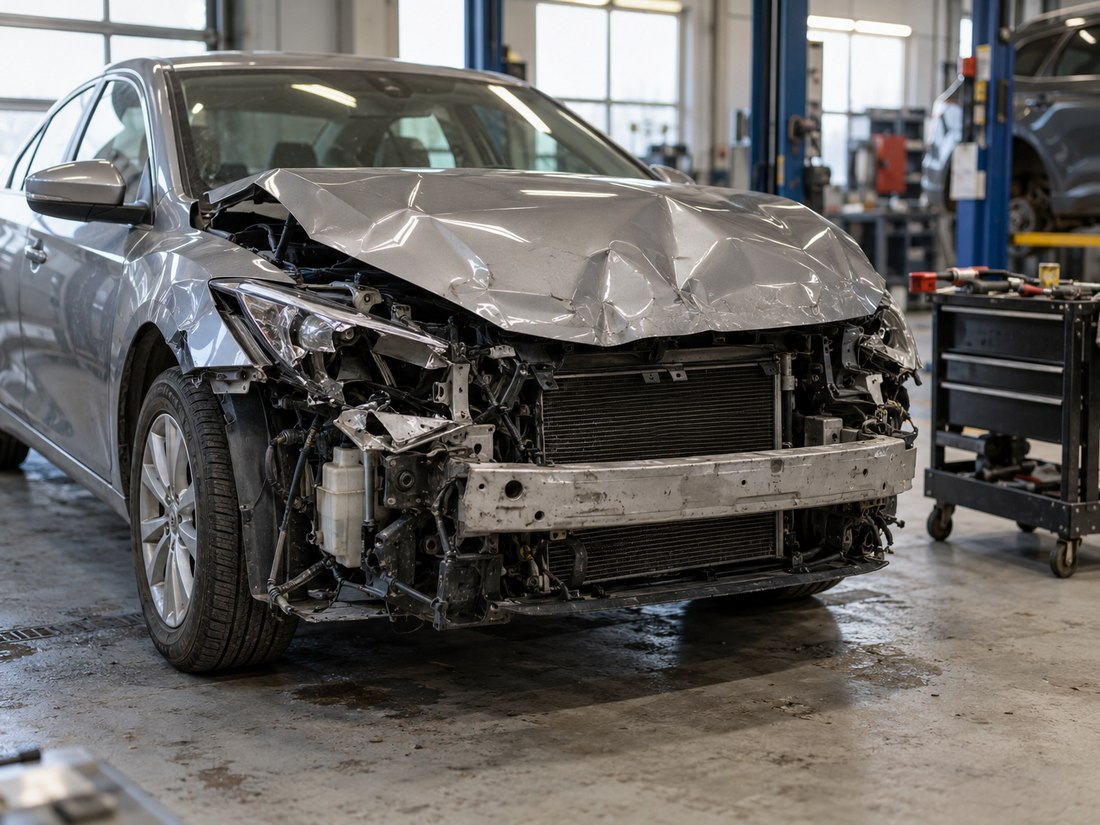
When a totaled car becomes salvage in California
California treats a car as a total loss salvage vehicle when it has been wrecked, destroyed or damaged so badly that the owner or the insurance company considers it uneconomical to repair, and it is not repaired for the owner. From then on, the DMV manual says, a salvage certificate is issued in place of the ownership certificate and becomes the car's ownership document. The DMV's Salvaged brand covers flood and vandalism damage as well as crashes.
If you keep the car after the settlement, the insurer tells the DMV on a Salvage Vehicle Notice of Retention by Owner, REG 481, and the DMV marks the record with a Salvage Retention status. The manual says the insurer or the owner "must apply for the salvage certificate within 10 days from the date the insurance company makes a total loss settlement with the owner." The REG 481 also records that you were told to surrender the title and plates and that the DMV record will carry the Salvaged brand.
A car that was stolen and never recovered is a different case: it is not a total loss salvage vehicle, and no salvage certificate can be issued for it.
Source: DMV manual 19.015: definitions; DMV manual 19.045: notice of retention; DMV manual 19.075: salvage certificate; DMV manual 19.050: salvage retention status; DMV form REG 481; DMV: branded titles.
REG 488C: applying for the salvage certificate
The form is the Application for Salvage Certificate or Nonrepairable Vehicle Certificate, REG 488C. Its top line tells you to complete only Section 1 or Section 2, together with Section 3. Section 1 is the salvage certificate. Section 3 records the plates: surrendered, lost, or kept by the owner for reassignment.
The DMV manual lists what goes in with it:
- the California title, properly endorsed (your signature on the REG 488C stands in for the new-owner signature on the title);
- a REG 227 duplicate title application instead, if the title is lost, stolen, mutilated or illegible;
- the plates assigned to the car, with Section 3 filled in;
- the salvage certificate fee, $28 as of October 2026 in the DMV's fee appendix.
Registration fees are not collected when the salvage certificate is issued. The manual says all fees must still be paid, or a Certificate of Non-Operation/Planned Non-Operation Certification (REG 102) filed on time, to avoid penalties, whether or not the car will ever be revived. The certificate is issued in the name of the owner on record when the car was wrecked, never a later buyer. You pass the car on through the assignment space on the salvage certificate itself. San Francisco's DMV field office is at 1377 Fell Street.
Source: DMV form REG 488C; DMV manual 19.075: salvage certificate; DMV manual appendix 1F: fees; DMV: San Francisco field office.
California's seven title brands, and no rebuilt brand
The DMV's Branded Titles page opens with a list of brands common across most states, and that list includes Rebuilt and Revived salvage. Read past it. The brands that appear on California titles and DMV records are a shorter list: Salvaged, Original Taxi (or Prior Taxi), Original Police (or Prior Police), Non-USA (Grey market), Warranty Return (or Lemon Law Buyback), Remanufactured, and Park Trailer.
So California has no rebuilt title. A totaled car that is repaired and registered again is a revived salvage vehicle, and the REG 488C says future titles and registration documents will show the car was Salvaged. The Salvaged brand also takes in cars that were previously dismantled as junk. On the current title and salvage certificate, the DMV says, "You will find the title brand in a red box, titled VEHICLE HISTORY, near the upper right-hand corner of the document." Check that box before you describe the car to anyone, so your words match the paper.
Source: DMV: branded titles; DMV form REG 488C.
Reviving a salvage car: the inspections and papers the DMV lists
If you repair the car and want it back on San Francisco streets, it has to be registered again as a revived salvage vehicle. The DMV lists:
- An Application for Title or Registration, REG 343. The cost of the vehicle you declare must include labor, even labor you did yourself.
- Proof of ownership, normally the California salvage certificate. If you repaired the car before the certificate was issued, a REG 488C and the salvage certificate fee are still required.
- A VIN inspection. A previously salvaged California car is inspected by an authorized DMV employee or referred to the California Highway Patrol; one salvaged in another state goes to the CHP. You hand in a Verification of Vehicle, REG 31, or the CHP's Certificate of Inspection, CHP 97C. The DMV gives 1-800-835-5247 for a CHP appointment.
- An electronic Vehicle Safety Systems Inspection (VSSI) certificate from a station licensed by the Bureau of Automotive Repair. One passing VSSI replaces the old brake and light certificates that older DMV paperwork, including REG 488C, still mentions, and paper certificates issued on and after September 28, 2024, are not accepted.
- A smog certification where one applies (BAR says one may be required for a 1976 or newer model; see the smog check guide), and the fees, including the $50 Total Loss Salvage/Dismantled Vehicles Inspection fee as of October 2026, paid before the inspection.
The BAR inspection checks body structure, brakes and lights, the passenger compartment, steering and suspension, and tires and wheels, plus an on-board diagnostics scan, an open-recall check and a road test. BAR says prices vary by station. A car built with airbags needs them in good working order to be reregistered, and if the verifier sees they are missing, the car must be inspected at a CHP salvage inspection station.
Source: DMV: junk and revived salvage vehicles; DMV manual 19.065: revived salvage; DMV manual 1.060: salvage VIN inspections; DMV manual 19.090: safety system inspection; BAR: safety systems inspections for revived salvage; BAR: safety systems inspection stations; DMV manual appendix 1F: fees.
The nonrepairable vehicle certificate: parts or scrap only
Section 2 of the same REG 488C is the application for a nonrepairable vehicle certificate. A nonrepairable car has no resale value except as parts or scrap metal, and the DMV manual names three kinds: a surgical strip (stripped completely when recovered from theft), a complete burn, and a car the owner has irreversibly designated as a source of parts or scrap only.
Once the certificate is issued, the car cannot be titled or reregistered, so it never goes back on a California road. Ownership can be transferred only twice on the certificate, no new certificate follows, and no odometer reading is collected. The 10-day deadline from the settlement matches the salvage one, and the certificate fee is $28 as of October 2026. To sell one, see the San Francisco junk car guide.
Source: DMV manual 19.040: nonrepairable vehicle certificate; DMV manual 19.015: definitions; DMV form REG 488C; DMV manual appendix 1F: fees.
Selling a salvage car in San Francisco: disclosure and the offer
Disclose the brand. The DMV's Branded Titles page says sellers, dealerships included, are legally required to disclose a vehicle's salvage title and history, and the REG 488C tells an owner who keeps a salvage car to inform any potential purchaser.
If you sell a repaired car privately, the inspection rule matters. BAR says a rebuilder must get the car inspected before selling it and give the buyer proof it passed, but "A registered owner selling their own vehicle is not considered a rebuilder." Your own totaled car, sold by you, falls on that side of the line.
Before you pay for repairs, weigh BAR's warning that fixing a total loss can cost more than the car is worth. The partner buyer's page says that, in many states, "vehicles with salvage, rebuilt, or missing titles may still be eligible for sale." Its offer is free and carries no obligation, and the online amount is what is paid at pickup, provided the car matches its description. The buyer's driver inspects the car, completes the buyer's title-transfer paperwork and hands you a check. Your own California step stays with you: the Notice of Transfer and Release of Liability.
Source: DMV: branded titles; DMV form REG 488C; BAR: safety systems inspections for revived salvage; The buyer: selling a car in any condition; The buyer: how it works.
Two salvage questions San Francisco owners ask
My insurer reported the car as salvage by mistake. Can the brand come off?
Only with paper proof. The DMV can change a total loss salvage status only when the insurer reported it in error. It needs one of three things: a declaration from the insurer's claims manager, signed arbitration or mediation papers stating the car is repairable, or a court order. If that fails, you apply for the salvage certificate or follow the revived salvage steps. See DMV manual 19.050.
My stolen car was never found, but the insurer paid. Do I need a salvage certificate?
No. The DMV manual says an unrecovered stolen vehicle is not a total loss salvage vehicle, and a salvage certificate cannot be issued for one. The REG 488C adds that a stolen car can get one only after it is recovered and determined to be a total loss. See DMV manual 19.075.
Where a salvage car goes from here
If the title has a lender on it or has gone missing, read title problems first. To see how the instant offer, the pickup and the check work, read how the offer works. To talk it through, call (628) 333-6040.
More on selling a car in San Francisco
- PaperworkWhich lines a San Francisco seller signs on the California title, when REG 227 replaces it, the 2026 odometer rule, and what the buyer pays.
- Release of liabilityHow a San Francisco seller files California's 5-day release of liability, online or on REG 138, and answers an SFMTA ticket or bridge toll after the sale.
- Smog checkWhen a San Francisco seller must hand over a California smog certificate, the exemptions by year and fuel, the 90-day validity, and help if the car fails.
- Title problemsHow to sell a car in San Francisco with a lost title, a loan, a late owner's estate, co-owners or a misspelled name, and the California DMV form for each.
- Any conditionSell a San Francisco car that won't start, lost its catalytic converter, was broken into or flooded: SFPD reports, BAR smog rules, free pickup.
- Junk carHow to get rid of a junk car in San Francisco: the partner buyer, a licensed dismantler or state retirement, the DMV forms, fee refunds and the SFMTA 72-hour rule.