Selling a San Francisco car that won't start, was broken into, or is missing parts
Yes, you can sell a car in San Francisco that will not start, has lost its catalytic converter, has a smashed window, or came through a flood. The partner buyer's own page says cars that do not run or are missing parts can still get an offer, and it pays for the pickup. What changes from case to case is the paperwork around the damage: a police report for a theft or a break-in, the smog rules for a missing converter, and a salvage certificate after an insurance total loss. Each case is below, with what to do before you ask for an offer.
Sources re-checked .
Short answer
You can sell a car in San Francisco in almost any condition. The partner buyer says cars that do not run or are missing parts can still get an offer, and it covers the pickup. Report a converter theft or break-in to SFPD, check BAR's smog rules for a missing converter, and describe every fault so the car matches the offer.
BAR: catalytic converter theft and the Smog Check Program; SFPD: police reports and online filing
What the partner buyer says about cars that need work
The buyer's selling page is plain about condition. It says "Vehicles that are non-running or missing parts can still receive a cash offer" and names engine failure, transmission problems, accident damage, flooding, hail, and cars an insurer has declared a total loss among the cars it will consider. The offer is free, carries no obligation, and is based on the car's condition and market data.
The part that matters most for a car with problems is how the sale closes. The same page says "At pickup, the driver verifies your vehicle and completes the title transfer paperwork." The online offer, per the buyer, is the amount it pays at pickup, and its home page says the pickup partner hands you a check once they inspect the car. That works when the car in the driveway is the car you described. A missing converter you left out, a cracked windshield you forgot, or a car that stopped starting since you filled in the form is the kind of difference the driver's check at pickup turns up. Describe every fault you know about, so the car at pickup matches the car in the offer.
Source: The buyer: selling a car in any condition; The buyer: how pickup and payment work.
When the car won't start or won't roll
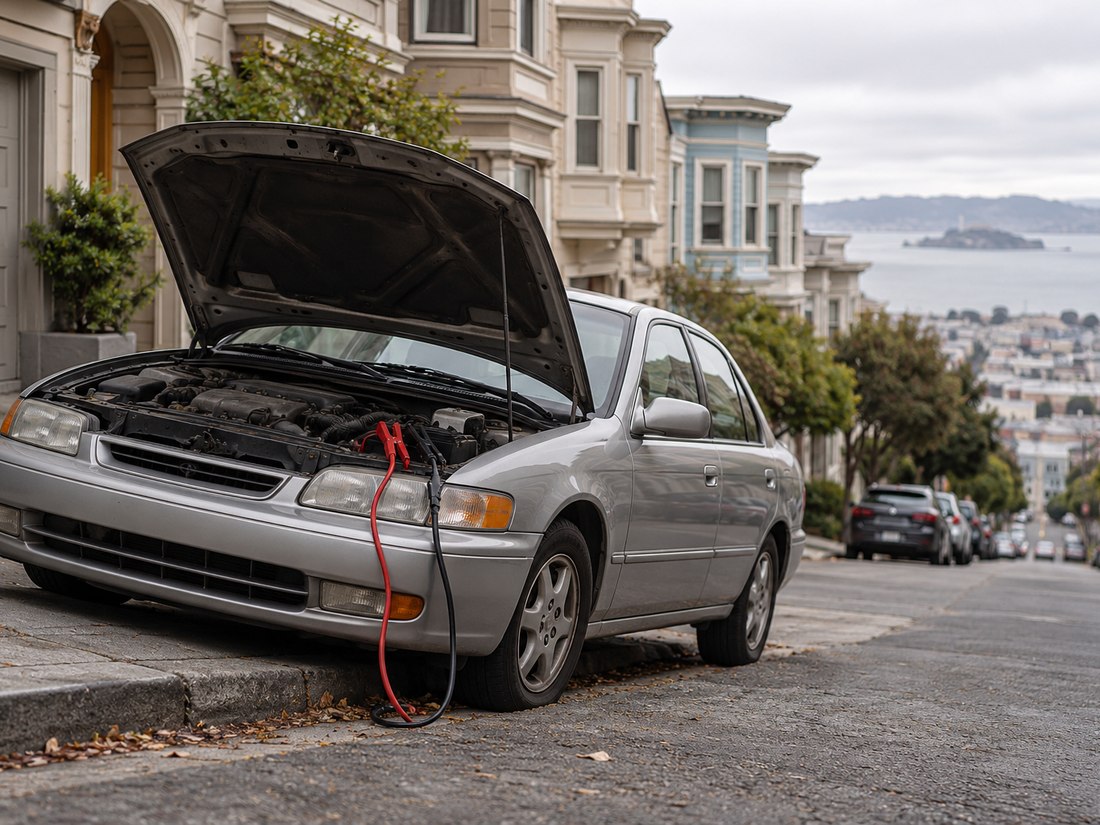
A dead battery, a seized engine, a failed transmission or a flat tire you never replaced does not mean you have to hire a tow truck first. The buyer's page says it arranges and pays for the pickup, with free towing at a time and location that suits you.
Before you ask for an offer, write down what the car does and does not do. Does it crank? Does it start? Does it roll, steer and brake when pushed? Are all four wheels on it, and do you have the keys? Then note where it sits: a garage, a driveway, a lot, or the street. Give these answers when you describe the car for the offer.
Parked on a San Francisco street? Watch the calendar. The city's 311 page takes reports from anyone about a vehicle left in one spot for more than 72 hours, and a car that cannot move will sit that long. The towed and impounded guide covers what follows a city tow.
Source: The buyer: free pickup and towing; SF311: report an abandoned vehicle.
Catalytic converter stolen: report it, then decide
Start with a police report. The SFPD police reports page lists the crimes you can file online. Theft is on the list, unless the stolen property is a passport, firearm, license plate, car, or electric vehicle, and vehicle tampering, including vandalism, is on it too. Filing online needs an email address. Without one, the page says to call 3-1-1, or 1-415-701-2311 from outside San Francisco. The non-emergency line is 1-415-553-0123. BAR says to ask your insurer whether your policy covers stolen auto parts.
Then the smog question. BAR calls the converter an essential emissions control part and a key component inspected during a Smog Check. It says a replacement "must be installed before your vehicle's next Smog Check" and that the part must be from the original manufacturer or a California Air Resources Board approved aftermarket converter with an Executive Order number for your exact vehicle, fitted at a licensed Smog Check station. BAR also says replacement can cost thousands of dollars depending on the make and model, and that its Consumer Assistance Program does not cover a stolen converter.
BAR's smog page says a Smog Check is required before you sell a vehicle, and lists the cars that do not need one, so a converter theft and a sale that needs a certificate collide. Who needs one, and the exemptions, are on the smog check guide. The other road is to sell the car as it stands. The buyer says cars missing parts can still get an offer, so you can ask for one with the converter marked missing. A decision rule: get a written replacement quote from a licensed Smog Check station, subtract it from what the car would bring with a new converter, and compare that figure with the offer for the car as it is now.
Source: SFPD: police reports and online filing; BAR: catalytic converter theft and the Smog Check Program; BAR: Smog Check; The buyer: cars with missing parts.
A smashed window or other break-in damage
The SFPD's break-in page splits the response in two. If the break-in is happening now, call 9-1-1. If it already happened, call the non-emergency line at 1-415-553-0123; you can ask for an officer to come out, or go to any San Francisco police station to file a report and have the car fingerprinted. You can also file online or through 3-1-1. Make a list of what was taken, with values and serial numbers for any electronics, and cancel stolen cards right away. The page notes that an insurance claim may need a police report.
A broken window or a forced lock does not stop a sale. The buyer's page does not name break-in damage, but it says its offer process is open to cars regardless of condition, including damaged ones. Put the damage in the description: which glass is broken, whether the ignition or steering column was tampered with, and what is missing or torn inside. If the car will sit outside before pickup, cover the open window with plastic and tape, so rain does not add water damage you would then also have to report.
Source: SFPD: reporting a vehicle break-in; SFPD: police reports and online filing; The buyer: damaged cars.
Flood, fire, or an insurance total loss
After a flood, a fire or a bad crash, the question is whether your insurer settles the car as a total loss. If it does, the DMV's registration manual starts a 10-day clock at the settlement: within that time the insurer, its designee or the owner applies for a salvage certificate on form REG 488C. The DMV's branded titles page describes the Salvaged brand as covering cars that were in an accident or took considerable damage from another source, such as a flood or vandalism.
If you kept the car and the certificate is in your name, the next buyer takes the car through the assignment space on that certificate. The buyer says cars declared a total loss by insurance companies can still receive an offer. Say in the description that the car was flooded or burned, even if it now runs. Read the salvage certificate guide before you list a car like this; it covers the certificate, revived salvage and nonrepairable cars.
Source: DMV: Vehicle Industry Registration Procedures Manual, salvage certificate; DMV: branded titles; The buyer: totaled and flood-damaged cars.
High miles, an old car, or an open recall
Age and mileage do not rule a car out. The buyer's page says it buys vehicles of all years, makes and models, running or not. Enter the odometer reading exactly as it shows, and mention any warning lights on the dash. BAR notes that a car will not pass a Smog Check with the check engine light on, which matters if your sale needs a smog certificate.
Check for open safety recalls before you sell. The federal recall lookup is run by NHTSA at nhtsa.gov/recalls. A Smog Check can flag them too: BAR says the vehicle inspection report also identifies any open safety recalls for your vehicle. If a recall is open, tell the buyer in the description, and keep any paperwork that shows a recall repair was already done.
Source: The buyer: older and high-mileage cars; BAR: Smog Check; NHTSA: safety recalls.
Two questions sellers ask about condition
Do I have to fix my car before I sell it in San Francisco?
No repair is needed to ask the partner buyer for an offer; its page says cars that do not run or are missing parts can still get one. Repairs can still matter for your own California steps, such as a smog certificate when your sale needs one. BAR's Smog Check page says when a Smog Check is required.
Can I sell a car with a stolen catalytic converter without replacing it?
Yes, you can ask for an offer on the car as it stands, with the converter marked missing. BAR says a replacement has to go in before the car's next Smog Check, and its Consumer Assistance Program does not cover a stolen converter. Read BAR's catalytic converter theft page and file the theft with SFPD first.
Pick the page that fits your car
If the damage ended in an insurance payout, read salvage certificates and selling a salvage car. If the car is past saving, compare your choices on the junk car guide. To talk through your car's condition with a person, call (628) 333-6040.
More on selling a car in San Francisco
- PaperworkWhich lines a San Francisco seller signs on the California title, when REG 227 replaces it, the 2026 odometer rule, and what the buyer pays.
- Release of liabilityHow a San Francisco seller files California's 5-day release of liability, online or on REG 138, and answers an SFMTA ticket or bridge toll after the sale.
- Smog checkWhen a San Francisco seller must hand over a California smog certificate, the exemptions by year and fuel, the 90-day validity, and help if the car fails.
- Title problemsHow to sell a car in San Francisco with a lost title, a loan, a late owner's estate, co-owners or a misspelled name, and the California DMV form for each.
- Junk carHow to get rid of a junk car in San Francisco: the partner buyer, a licensed dismantler or state retirement, the DMV forms, fee refunds and the SFMTA 72-hour rule.
- Car retirementWhat California's CAP pays San Francisco owners to retire a car that still drives, BAR's conditions, the Bay Area buy back, and how to weigh an offer.