From online offer to check in hand: a San Francisco car pickup, step by step
You describe the car online, get a free offer that carries no obligation, and have a week to accept it and book a pickup. On the day, the partner buyer's driver comes to your San Francisco address, checks the car and its VIN against your description, completes the buyer's title paperwork, and hands you a check. The amount holds when the car matches what you reported. Two California duties stay with you: a valid smog certificate when you sell, unless the car is exempt, and the release of liability within 5 calendar days.
Sources re-checked .
Short answer
You describe the car online and get a free offer with no obligation, then have a week to accept and book pickup. The buyer's driver checks the car against your description, completes the buyer's title paperwork and hands you a check. A car that does not match can get a revised offer, which you may decline. The California release of liability and smog certificate stay with you.
California DMV: Notice of Transfer and Release of Liability; California DMV: smog inspections
Describe the car and read the offer
The buyer's help center says the offer is based entirely on the vehicle details you provide online, and that you do not need to bring it anywhere to be appraised. Answer every condition question as the car is today. If it needs a jump, say it does not start.
If the car has failed smog, the buyer's guide to the starts-and-drives question tells you to answer Yes, it starts and drives, for that problem alone. The same help center says a car does not need to pass a state inspection or emissions test to be eligible.
The offer is free, and asking for one commits you to nothing. The buyer's home page gives you a week to accept it and schedule pickup. If you wait, the buyer emails updated offer amounts from time to time until you accept or cancel. After you accept, it may ask for photos sent from your phone.
Source: The buyer: how the offer is made; The buyer: a week to accept; The buyer: appraisal and inspection; The buyer: the starts-and-drives question; The buyer: when the offer can change.
No title in hand, or a loan still on the car
Missing title. The buyer's help center says it has many buyers that buy cars without a title, and its selling page says a car with a missing title may still be eligible in many states. Answer the title question with the option for a title you cannot find, and the offer is worked out again from that answer. To replace the title first, see our title problems guide.
A loan on the car. The buyer will not take a car that still has money owed on it, so the loan is paid off first. Its California title guide says a lien shown on the title is released on the title itself or with a separate lien release letter. For a California car two model years old or newer, the DMV manual is stricter: a REG 166 or any other separate lien release is not acceptable, and the release has to come on the title. Pay off the lender and get that release before you book.
Signing. The same guide says to sign exactly as your name is printed on the title, in black or blue ink, and to leave the buyer's section blank. A car titled to a business needs a business card or a signed letter of authorization.
Source: The buyer: selling without a title; The buyer: title issues; The buyer: liens and loans; The buyer: California title signing; The buyer: business titles; DMV manual: basic transfer requirements; DMV manual: duplicate titles.
Accept and choose a pickup window
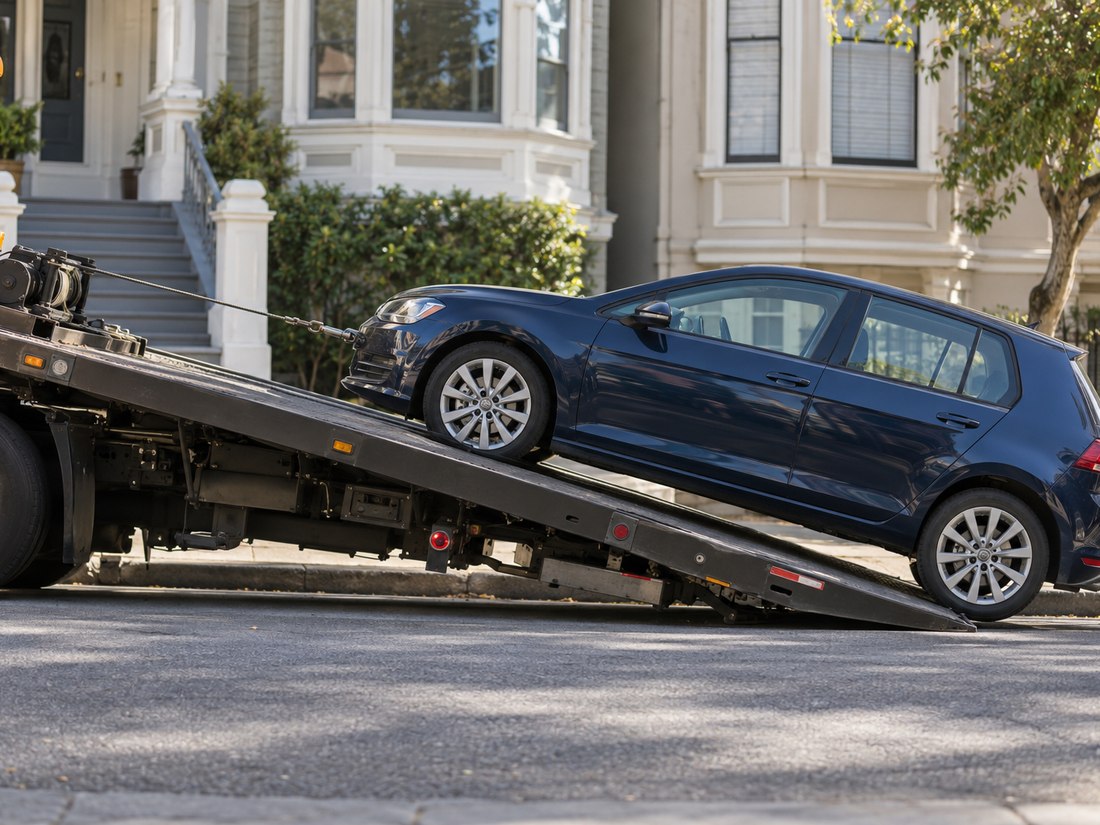
The buyer books the tow and pays for it, at a time convenient for you. Once you accept, you may be able to book it yourself: log in, open the menu, go to My offers, pick the offer, and use Choose pickup window. If that button is missing, self-scheduling is not offered in your area, and your assigned carrier contacts you to set the time.
Garage pickups work in many cases but depend on the carrier and the garage setup, the buyer's help center says; height limits, tight entries and underground levels can limit access for some carriers. Give the carrier the clearance, the level and any gate code; if it cannot reach the car, the buyer can look at reassigning the job.
If the car waits on a San Francisco street. The city's 72-hour parking limit keeps running while you wait for the truck, and SFMTA can cite and tow a car that is obviously disabled and inoperable, or more than six months out of registration, without a Marking Notice first. Plan the pickup date with that in mind.
Source: The buyer: free pickup; The buyer: scheduling pickup; The buyer: garage pickups; San Francisco SFMTA: how to avoid parking tickets.
What to have ready before the tow truck arrives
- The title, signed before pickup by the titled owner; the buyer says no one else can do that part.
- The lien release, if a lender is on the title.
- The smog certificate, unless the car is exempt.
- Every key and key fob.
- A photo ID; the carrier may ask for one to confirm you own the car.
- The car emptied of your belongings, parked where a tow truck can reach it.
- The plate number, the last five digits of the VIN, the odometer reading and the new owner's name and address, written down. The DMV's online release of liability asks for each one.
The buyer's general checklist says to be ready to remove the plates, but rules vary by state. In California, ordinary plates stay on the car, per the DMV, and the buyer's California guide agrees: standard plates stay, while specialty or personalized plates come off. If yours are special plates, our after you sell page covers keeping them, along with tolls, insurance and tickets.
Source: The buyer: getting ready for pickup; The buyer: if you are not there; The buyer: California title signing; The buyer: ID at pickup; California DMV: license plates; The buyer: California post-sale steps; California DMV: Notice of Transfer and Release of Liability; California DMV: smog inspections.
What the driver checks, and what can change the number
At pickup, the driver verifies the car and completes the buyer's title transfer paperwork, checking the condition and the VIN against what you reported. The buyer says the online offer is the amount paid at pickup, with no haggling, as long as the car matches.
When it does not match, the buyer's help article is specific: "If major components are missing, removed, or if damage was not documented when the Offer was obtained, a revised Offer may be presented." You tell the carrier whether you accept the new figure. Accept it and the sale goes ahead; decline it and the offer is canceled, and you are not obligated to take a lowered amount. Moving the pickup to a different ZIP code can also change the offer, with buyer demand in that area.
Source: The buyer: pickup and title paperwork; The buyer: when the offer can change; The buyer: inspection at pickup.
When the check is handed over
In the buyer's words: "You will be paid at the time of pickup, the Carrier will provide your check once the vehicle is secured and all documents are exchanged." The check comes in exchange for your signed title and the keys. The buyer says the whole sale usually takes a few days, from offer to payment.
If no one can be there, confirm the carrier can handle an unattended pickup and ask buyer support ahead of time to mail payment. The help center says to allow 7 to 10 business days for a mailed check after the pickup is confirmed. A relative or friend who stands in for you must be over 18 to receive the check, and the carrier must be told.
Source: The buyer: when you get paid; The buyer: payment by check; The buyer: if you are not there.
The California steps the driver does not do for you
The smog certificate. California puts this on the seller, at the sale. The DMV wants a valid certificate in the new owner's hands when you sell. The exception the DMV names on that page is a car under four years old, which skips the inspection while the new owner pays a smog transfer fee. The buyer's eligibility rule for cars that fail smog does not change what the DMV asks of you. If it fails, the DMV points you to the Bureau of Automotive Repair's Referee Program and its Consumer Assistance Program. See our smog check guide for the exemptions, and ask the buyer before pickup about a car that will not pass.
The release of liability. The buyer's own California guide tells you to file it online within 5 days of the date of sale. The DMV counts calendar days, weekends included, starting from the date you sell the car and hand it over. Once the DMV receives it, liability for parking and traffic violations and civil litigation after the date of sale passes to the buyer. Online, print the confirmation; on paper, mail form REG 138. Our release of liability page has the details.
Source: California DMV: smog inspections; California DMV: Notice of Transfer and Release of Liability; The buyer: California post-sale steps.
Two questions sellers ask before pickup
Can the driver lower the offer when the truck shows up?
Only if the car differs from what you reported, for example a major component that is missing or removed, or damage you did not mention. The carrier then presents a revised figure, and you choose. Take it and the sale proceeds; turn it down and the offer is canceled, with no obligation on you. Accurate condition answers protect the amount (the buyer: offer changes at pickup).
Do I have to be home when the car is picked up?
In many cases, no, but not every carrier can do an unattended pickup, so ask yours first. The titled owner signs the title in advance, and you agree where the title and keys will be left. An adult over 18 can take the check for you if the carrier is told (the buyer: being there at pickup).
Before you book the truck
If your title is lost, has a lender on it, or names someone else, start with the title problems guide. Then line up your release of liability so it goes in the day the car leaves. Questions about your situation? Call (628) 333-6040.
More on selling a car in San Francisco
- PaperworkWhich lines a San Francisco seller signs on the California title, when REG 227 replaces it, the 2026 odometer rule, and what the buyer pays.
- Release of liabilityHow a San Francisco seller files California's 5-day release of liability, online or on REG 138, and answers an SFMTA ticket or bridge toll after the sale.
- Smog checkWhen a San Francisco seller must hand over a California smog certificate, the exemptions by year and fuel, the 90-day validity, and help if the car fails.
- Title problemsHow to sell a car in San Francisco with a lost title, a loan, a late owner's estate, co-owners or a misspelled name, and the California DMV form for each.
- Any conditionSell a San Francisco car that won't start, lost its catalytic converter, was broken into or flooded: SFPD reports, BAR smog rules, free pickup.
- Junk carHow to get rid of a junk car in San Francisco: the partner buyer, a licensed dismantler or state retirement, the DMV forms, fee refunds and the SFMTA 72-hour rule.