Your car is gone. Here is what San Francisco sellers still have to close out
After you sell a car in California, file the Notice of Transfer and Release of Liability within 5 calendar days, keep its confirmation, and leave ordinary plates on the car. Then close the Bay Area loose ends: take the FasTrak tag out and the plate off your toll account, answer any Golden Gate Bridge invoice or SFMTA parking ticket that shows up for the sold car, tell your insurer, and clear your data from the dashboard. This page takes those jobs in order, with each agency's own rule.
Sources re-checked .
Short answer
File the DMV release of liability within 5 calendar days and keep the confirmation. Leave ordinary plates on the car. Pull the FasTrak tag and delete the plate from your account. Dispute any Golden Gate toll invoice or SFMTA ticket dated after the sale with that confirmation, then tell your insurer and clear your data from the car.
California DMV: Notice of Transfer and Release of Liability; Golden Gate Bridge: Toll FAQs
Step one: the release of liability and its confirmation page
California gives you 5 calendar days, counted from the day you sell and hand the car to its new owner, to tell the DMV. The online form asks for the buyer's name and address, the plate, the VIN's last five digits and the odometer reading. Once the DMV has it, the agency says, liability for parking violations, traffic violations and civil suits dated after the sale moves to the buyer.
Print the confirmation and keep it; it is the proof for every dispute below. An online filing updates the vehicle record within 1 business day. The release is not a transfer, though. Your name comes off the vehicle record only when the buyer applies for the transfer with the title you signed. Until then, toll and ticket mail can still find you.
If the partner buyer's driver collected the car, the driver completed the buyer's title-transfer paperwork, but the release is still yours to file. See the release of liability page.
Source: California DMV: Notice of Transfer and Release of Liability; The buyer: selling and free pickup.
The plates stay on the car, with one exception
Do not unscrew ordinary plates. The DMV's plates page says "Generally, license plates remain with the vehicle they were issued to." So the number on the bumper keeps following the car you sold, and bridge cameras bill by that number.
The exception is three kinds of plate: personalized environmental, special recognition and special interest. The DMV says these can be reassigned to another vehicle when the owner asks and pays the fees. Its REG 17 application, for special interest and environmental plates, says such plates belong to the plate owner, not the vehicle. When you sell, you can reassign them to another car right away, retain them for later, or surrender them to the DMV. Retained plates can carry annual retention fees. Special recognition plates use REG 17A.
Source: California DMV: License plates; California DMV: Special interest and personalized plates; California DMV: Special Interest License Plates Application (REG 17); Golden Gate Bridge: Toll FAQs.
FasTrak: take the tag out and the plate off the account
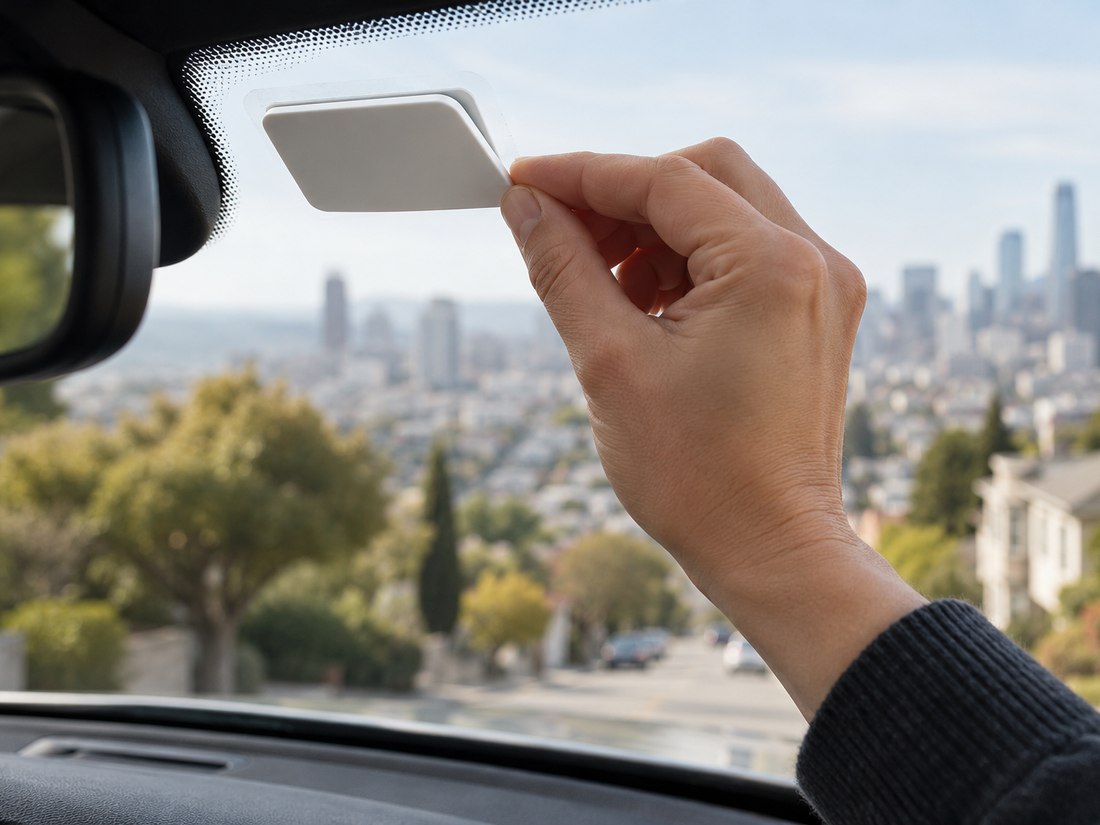
FasTrak Standard and Flex tags can move between vehicles, so a tag left on the windshield keeps billing your account wherever the new owner drives. Take it out before pickup.
Then the plate. FasTrak recommends listing every vehicle that uses your tag, with its plate number, make and model, and says you are responsible for tolls charged to your account by your plate number. The Golden Gate Bridge District adds that when no tag is read, the plate number is used to find a FasTrak account. So sign in at bayareafastrak.org and delete the sold car's plate from the vehicle list the day it leaves.
- Keeping the account: move the tag to your next car and add that car's plate.
- Closing it: do it online under Account Settings or with an Account Closure Form. FasTrak refunds the tag deposit when the tag comes back in good working condition. Return tags within 10 business days of the closure request, by mail to FasTrak Customer Service Center, Toll Tag Return, PO Box 26927, San Francisco, CA 94126.
Source: Bay Area FasTrak: Toll tag basics; Bay Area FasTrak: Managing your account; Bay Area FasTrak: Toll tags guide; Golden Gate Bridge: Toll payment options.
A Golden Gate Bridge toll invoice for a car you sold
The bridge charges only southbound, into San Francisco, and reads either a FasTrak tag or the plate. With no tag and no License Plate Account, the District says a Toll Invoice is issued and sent to the registered owner of the vehicle. Until the buyer finishes the transfer, the DMV record can still show you as that owner.
As of July 1, 2026, a two-axle car pays $10.25 with FasTrak, $10.50 through a License Plate Account or One-Time Payment, and $11.25 on a Toll Invoice. The District says an unpaid invoice turns into a Toll Violation with a $25 penalty for each toll transaction, and that if a second notice also goes unpaid, the amount goes to the DMV, which withholds the registration until the penalties are paid.
So do not ignore it. The District's FAQ says "If you were sent a Toll Invoice for a vehicle that does not belong to you, please complete the toll dispute information on the reverse side of the invoice" and return it to the FasTrak Customer Service Center by the due date. The FAQ lists no enclosures, but a copy of your release confirmation and bill of sale shows the sale date.
Source: Golden Gate Bridge: Tolls and payment; Golden Gate Bridge: Toll FAQs; Golden Gate Bridge: Toll payment options.
An SFMTA parking ticket after the sale
The clock is short. SFMTA says "Parking or Transit Violation Citations must be protested within 21 days from the date the ticket is issued or from the date of the first courtesy notice." It also says not to pay a citation you want to protest.
- Administrative review. Protest online, uploading receipts and other evidence, or mail the Protest Form. For a sold car, the evidence is your release confirmation and bill of sale, showing a sale date before the ticket date. The citation goes on hold while SFMTA reviews it, which can take up to 90 days.
- Administrative hearing. If the protest is denied, you have 25 calendar days from the denial letter to request a hearing. A deposit equal to the fine is required unless a listed waiver applies. In-person hearings are at the SFMTA Customer Service Center, 11 South Van Ness.
- Superior Court. After a hearing loss, SFMTA says you have 30 days to seek a De Novo review at San Francisco Superior Court, 850 Bryant Street, Room 145, for a $25 filing fee.
A tow bill from before the sale is covered on the towed or impounded page.
Source: SFMTA: Contest a citation.
DMV renewal notices and getting registration money back
A renewal notice for the sold car means, by the DMV's account, that your release never arrived or could not be read, and the fix is a new release. Because notices go out more than 60 days before the registration expires, one may also have crossed your filing in the mail.
The DMV ties registration fees to the car, not the owner. Registration you paid before the sale is not refunded. Registration you paid after the sale is. To claim it, the DMV asks for the Application for Refund, ADM 399, with a signed REG 138 or your online release confirmation, plus the registration card and the unused sticker. If you no longer have the card or sticker, a Statement of Facts, REG 256, explains why. You have three years from the payment date to file.
Source: California DMV: Notice of Transfer and Release of Liability; California DMV: Payments and refunds.
Insurance, then the data the car still holds
The California Department of Insurance tells drivers to let their agent, broker or insurance company know when they sell a car, and its glossary lists no longer owning or driving a car as a reason to cancel a policy. The guide sets no day for it. A sensible order: the car has gone, the release is filed, then you call.
Then the data. If the car has already gone, you can still act on part of the Federal Trade Commission's checklist for sellers: cancel or move connected services such as satellite radio, Wi-Fi hotspots and data plans, and unlink the maker's app that can control or find the car. If the buyer's driver has not arrived yet, clear the rest first. The FTC names phone contacts and the address book, app log-ins, stored music, saved addresses and routes, and garage door codes, and it warns that a factory reset may still leave work to do. For the rest of the sale-day paperwork, see the California seller paperwork page.
Source: California Department of Insurance: Automobile insurance guide; FTC: Selling your car? Clear your personal data first.
Two questions sellers ask after the car leaves
Do I take my license plates off when I sell my car in California?
No. The California DMV says plates generally stay with the vehicle they were issued to. Personalized environmental, special recognition and special interest plates are the exception: they can be reassigned to another car on request, for a fee. See the DMV license plates page before the sale if your plate is one of those.
My sold car is still getting tickets. Am I responsible?
Not for violations after the sale date, once the DMV has your release of liability; the DMV says that liability passes to the buyer. Protest each ticket with your confirmation page. In San Francisco, SFMTA gives you 21 days from the ticket or first courtesy notice; see SFMTA's contest page and the DMV release page.
Close out the sale, then put it behind you
If you have not filed it yet, start with the release of liability; every dispute above leans on it. Selling another car? Compare a private sale, a trade-in and the partner buyer's offer on selling options, or call (628) 333-6040.
More on selling a car in San Francisco
- PaperworkWhich lines a San Francisco seller signs on the California title, when REG 227 replaces it, the 2026 odometer rule, and what the buyer pays.
- Release of liabilityHow a San Francisco seller files California's 5-day release of liability, online or on REG 138, and answers an SFMTA ticket or bridge toll after the sale.
- Smog checkWhen a San Francisco seller must hand over a California smog certificate, the exemptions by year and fuel, the 90-day validity, and help if the car fails.
- Title problemsHow to sell a car in San Francisco with a lost title, a loan, a late owner's estate, co-owners or a misspelled name, and the California DMV form for each.
- Any conditionSell a San Francisco car that won't start, lost its catalytic converter, was broken into or flooded: SFPD reports, BAR smog rules, free pickup.
- Junk carHow to get rid of a junk car in San Francisco: the partner buyer, a licensed dismantler or state retirement, the DMV forms, fee refunds and the SFMTA 72-hour rule.